Today’s Marketing

How to write a follow up email after no response

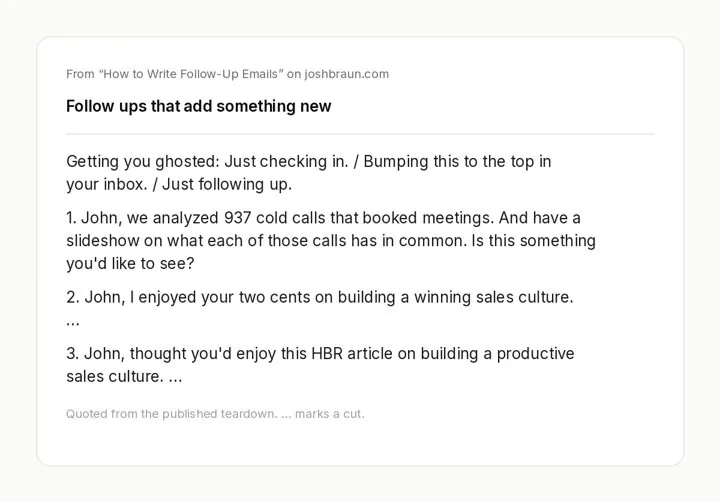
A follow up after no response should add something new, not just check in. Bump once in the same thread with the ask in one line, then send a resource, an insight or a comment on their work. Josh Braun lists just checking in and just following up among the follow ups that get people ghosted.

Updated · By Blake Emal · 5 real examples, each linked to its source

What are the steps

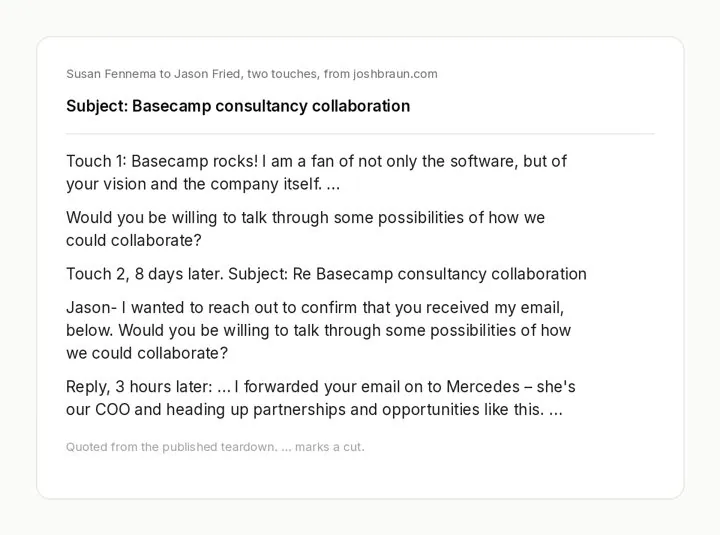
  1. Wait a few daysSusan Fennema waited eight days before her bump.
  2. Bump in the same threadKeep the original email visible below.
  3. Add something newA resource, an analysis or a relevant article.
  4. Make replying easyA yes or no question, or lettered options.
  5. Know when to stopEnd with a polite breakup.

How do the options compare

Follow up typeReal exampleWhy it works
One line bumpBasecamp two touchKeeps the context in view
Offer an asset937 cold calls analysisGives a reason to reply
Compliment their takeJosh Braun listPersonal, not pushy
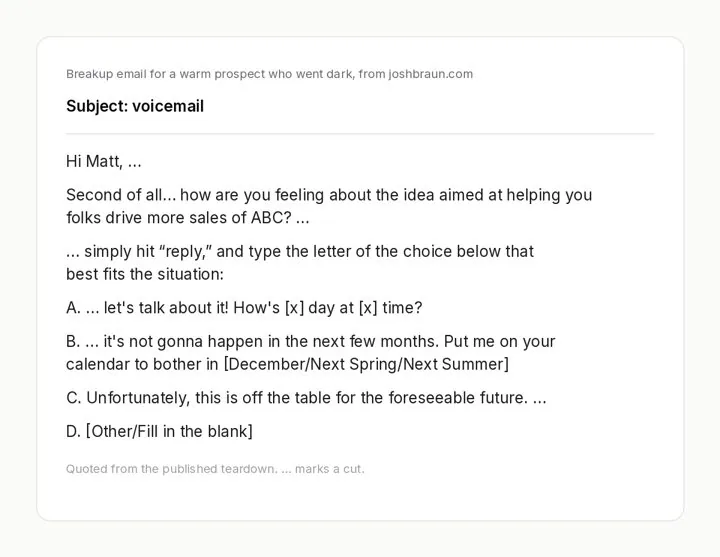
Multiple choicevoicemail emailReply takes one letter
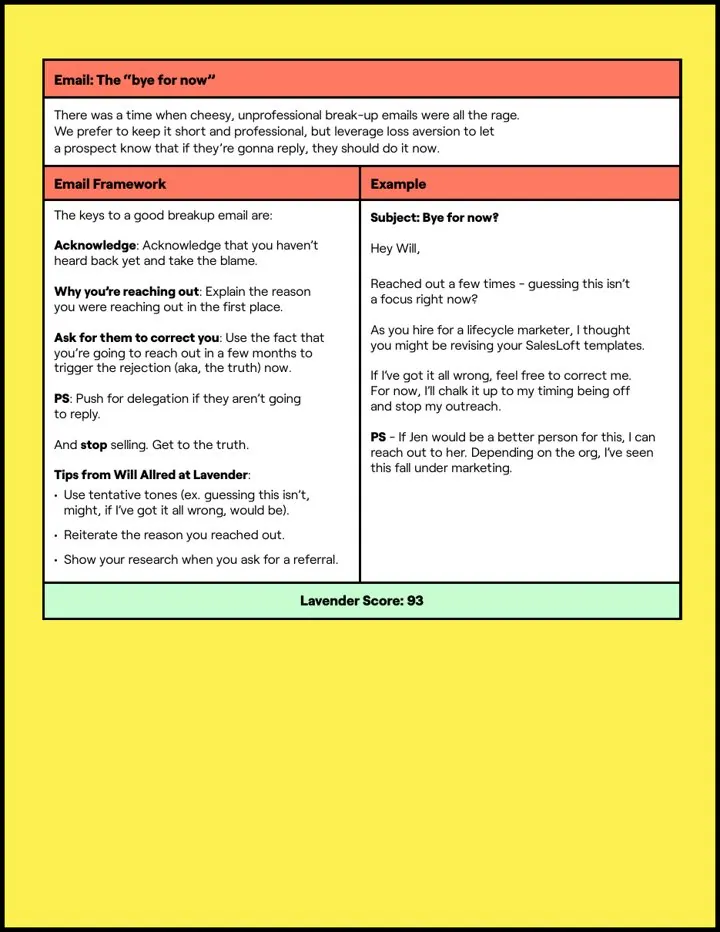
BreakupBye for nowInvites the truth

Which real examples show it

Add something new in every follow up
Josh Braun

1. Add something new in every follow up

Each follow up gives the reader something useful or personal, so it reads as help rather than pressure.

  1. Never send just checking in
  2. Offer a resource, analysis or insight
  3. Reference something the prospect said
  4. Ask a yes or no question
  5. Change the angle each time

Full breakdown · Source

Follow up once in the same thread
Beyond the Chaos

2. Follow up once in the same thread

A short bump in the same thread keeps the context in view. Josh Braun's teardown also shows how much shorter the first email could have been.

  1. Open with a sincere compliment
  2. Name one benefit for them
  3. Ask one clear question
  4. Wait about a week
  5. Bump in the same thread with the same ask in one line

Full breakdown · Source

Give a quiet prospect multiple choice answers
Josh Braun

3. Give a quiet prospect multiple choice answers

Replying takes one keystroke, and option C gives permission to say no, which makes any answer easier than silence.

  1. Call first and leave a voicemail about the outcome
  2. Use voicemail as the subject only if you left one
  3. Restate the result they wanted
  4. Offer lettered options including a clear no
  5. Keep the tone light and human

Full breakdown · Source

End a sequence with a polite breakup
30 Minutes to President's Club

4. End a sequence with a polite breakup

Tentative wording and an easy way to say no often draw the truth, and the PS asks for a referral.

  1. Acknowledge you have not heard back
  2. Restate the reason you reached out
  3. Invite them to correct you
  4. Say you will stop for now
  5. Ask if someone else owns it

Full breakdown · Source

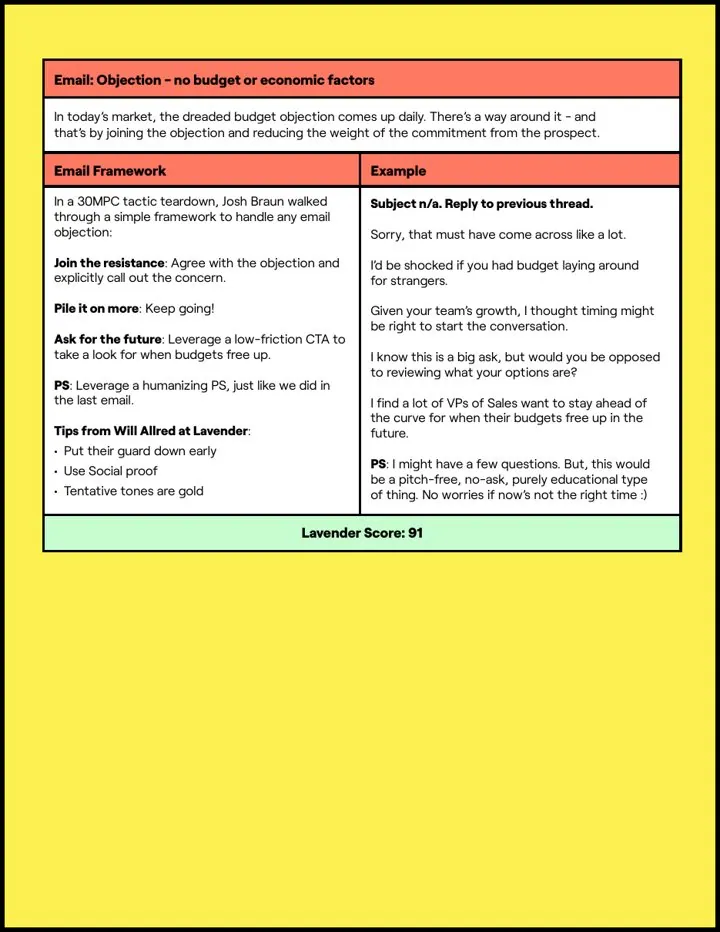
Agree with the no budget reply
30 Minutes to President's Club

5. Agree with the no budget reply

Agreeing lowers the reader's guard, and asking about the future is easier than asking for a purchase now.

  1. Reply in the same thread
  2. Agree with the objection
  3. Explain why you thought the timing fit
  4. Ask for a no pressure look ahead
  5. Add a human PS

Full breakdown · Source

Get three ideas for your own product

Pick a channel and a goal. Get real examples and a plan to fill in. Free, no login.

Open the idea generator

What else do people ask

How many follow ups should I send

Enough to give several real reasons to reply, then stop with a breakup email.

What should I never write in a follow up

Just checking in, bumping this, or did you get my email. They add nothing new.

Should follow ups be in the same thread

Usually yes, so the reader sees the original context.

Related answers

One email every Monday