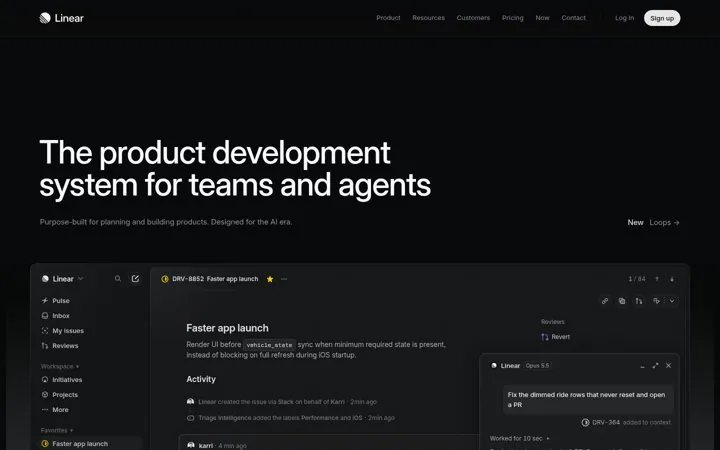
 Linear
1. Name both users in your headline
Naming agents next to teams tells buyers the product fits how they work now.
- Name every kind of user in one line
- Show the real product under the headline
- Keep the sub line to one short sentence
A strong landing page headline says who the product is for and what changes for them, in plain words a buyer would use. Name the job or the person, make one concrete promise, and let the subhead and the product shot carry the proof. Cut anything a stranger would need explained.
Updated · By Blake Emal · 6 real examples, each linked to its source
| Headline type | When to use it | Real example |
|---|---|---|
| Name the audience | Crowded category, clear buyer | Linear |
| Borrow a saying | Familiar problem, playful brand | Ramp |
| Name the worry | Buyers are nervous about a shift | Retool |
| Promise one shortcut | Product replaces many steps | Raycast |
| Put a time to start | Signup is the main friction | Mercury |
LinearNaming agents next to teams tells buyers the product fits how they work now.
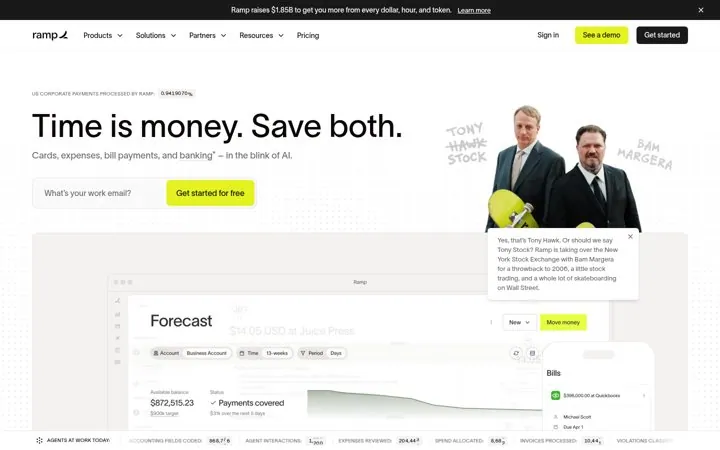
 Ramp
A phrase everyone knows becomes a promise people remember.
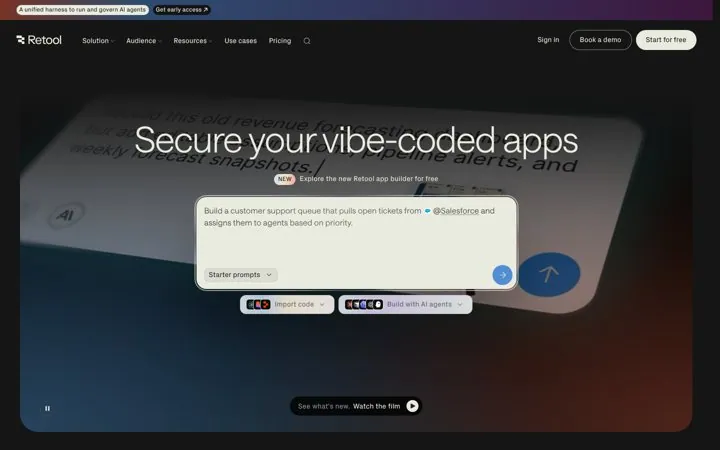
 Retool
Speaking to a fresh pain shows the product is current.
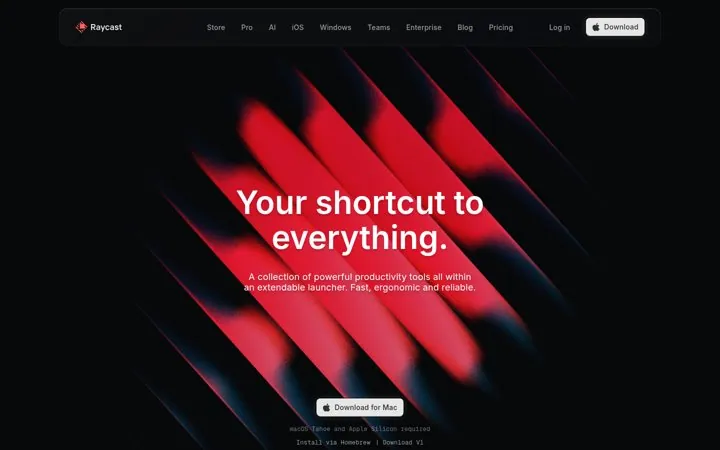
 Raycast
A single big promise and a single action make the choice easy.
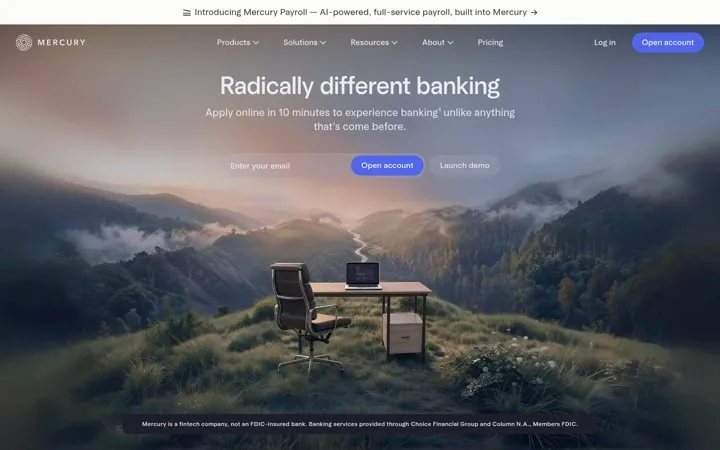
 Mercury
A clear time cost makes signing up feel small.
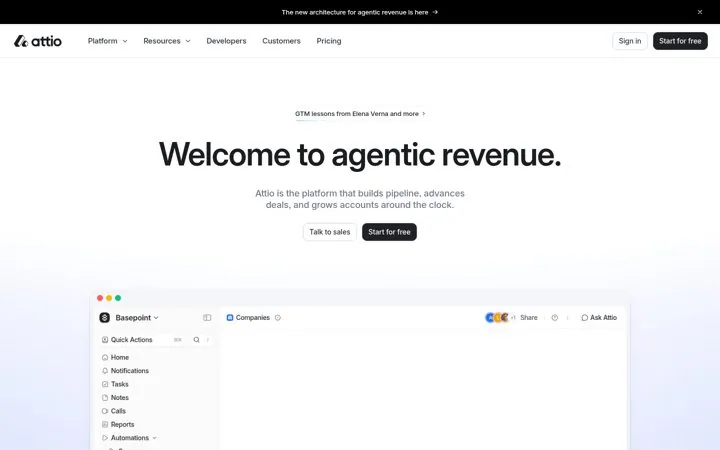
 Attio
A warm welcome to a new idea feels like an invite, not a pitch.
Pick a channel and a goal. Get real examples and a plan to fill in. Free, no login.
Short enough to read in one glance. Most headlines in our examples fit on one or two lines on desktop. If you need a comma to finish the thought, move the rest to the subhead.
Lead with the outcome when the category is familiar, and with what it is when the category is new. Attio names the new category it wants to own.
The how. One sentence that explains the mechanism or names the product type, so the headline can stay short.