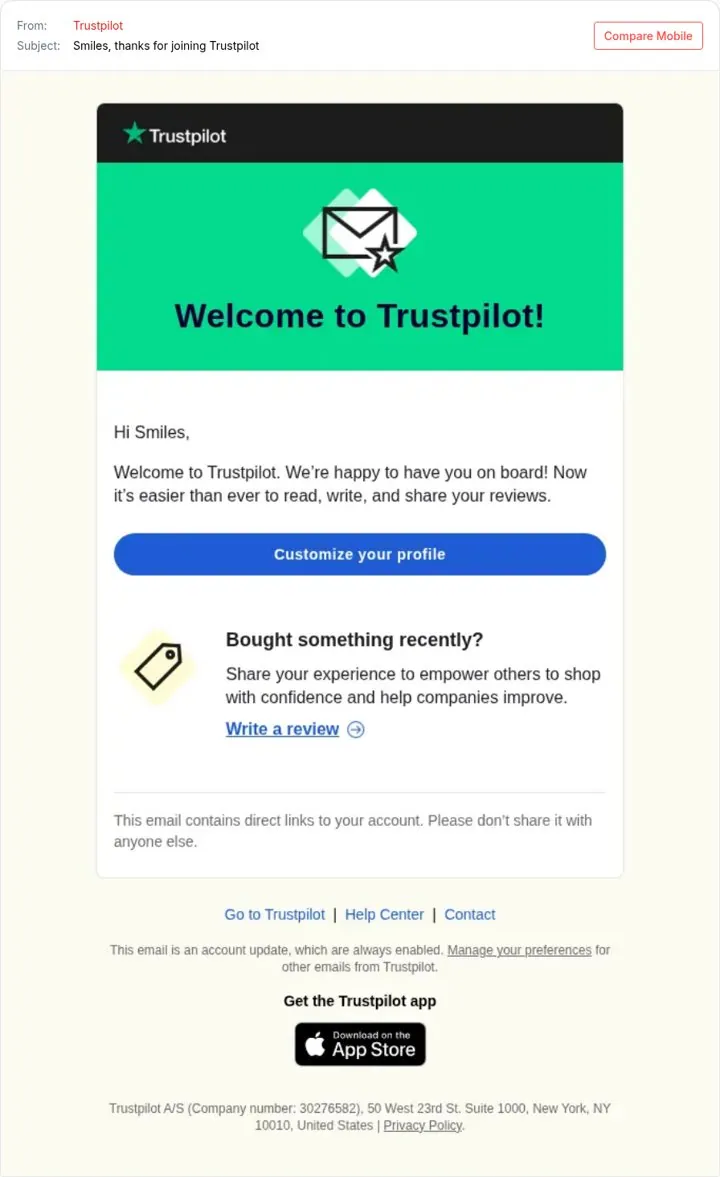
 Trustpilot
1. Give one clear first step in welcome emails
A single first step makes the welcome easy to act on.
- Thank them by name
- Give one main button
- Add one second idea below
An onboarding email sequence walks a new user from signup to their first real result, one step per email. Start with a welcome and a single action, then teach the next most useful feature, share what other customers do, and check in if they stall. Trigger emails by what users did, not only by date.
Updated · By Blake Emal · 5 real examples, each linked to its source
| Goal | Real example | |
|---|---|---|
| Welcome | First step | Trustpilot |
| What you can do now | Show the range | Greenhouse |
| Teach | Build skill | Canva |
| Peer proof | Build confidence | Beefree |
| Grow | Tie to their revenue | Stripe guide |
TrustpilotA single first step makes the welcome easy to act on.
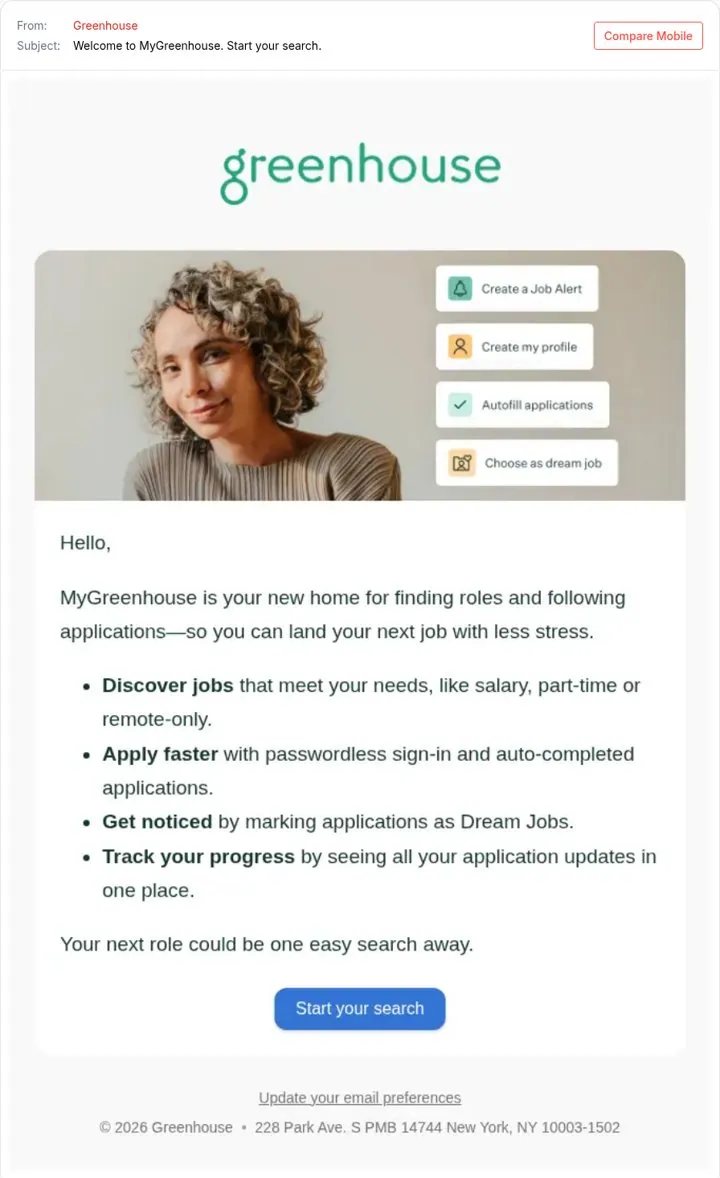
 Greenhouse
Bold short benefits show the value at a glance.
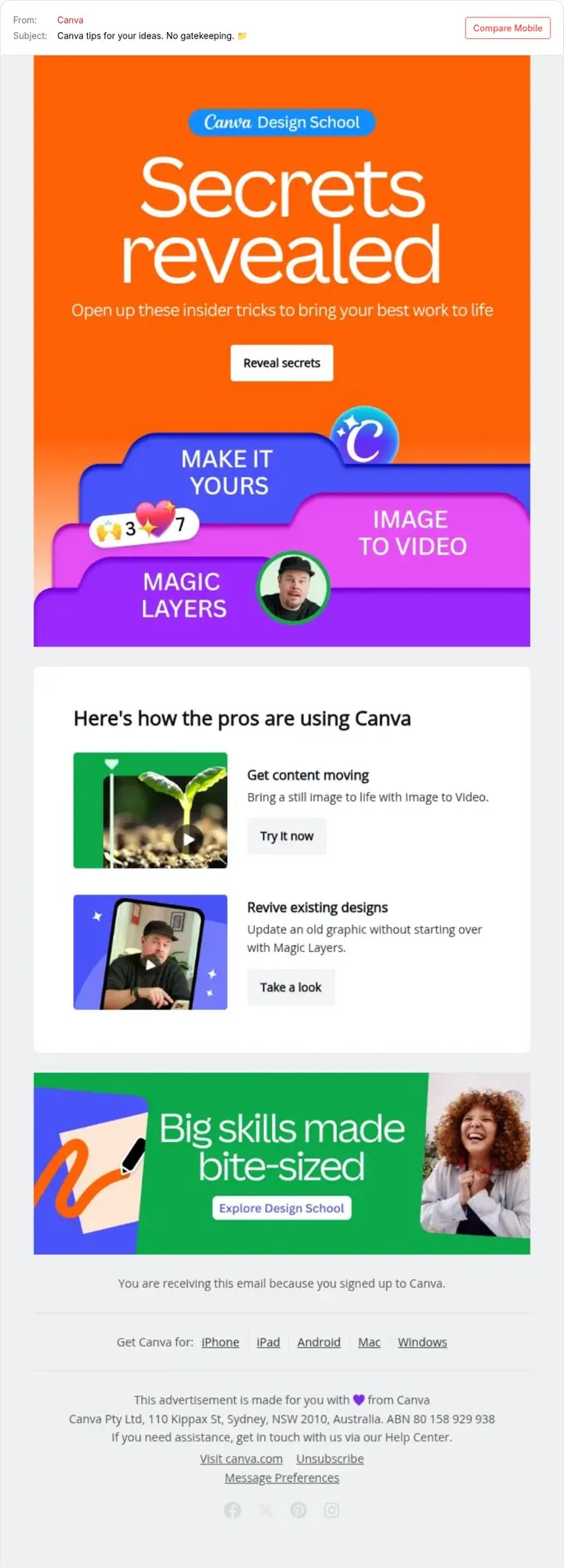
 Canva
Tips feel like a gift, and the features come along for the ride.
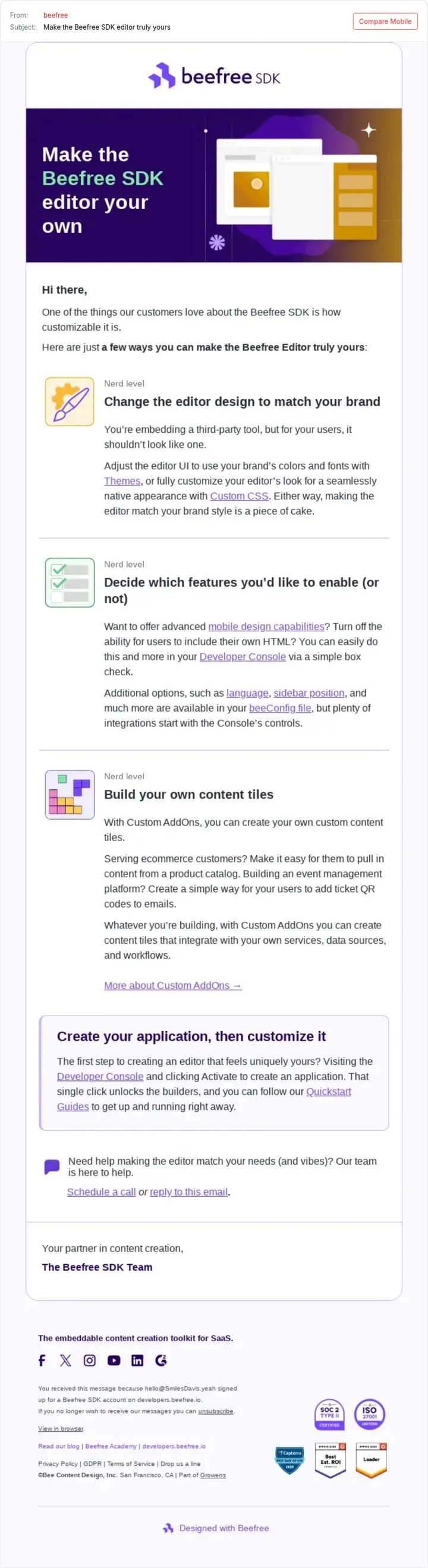
 Beefree
Pointing to what others love is social proof in the inbox.
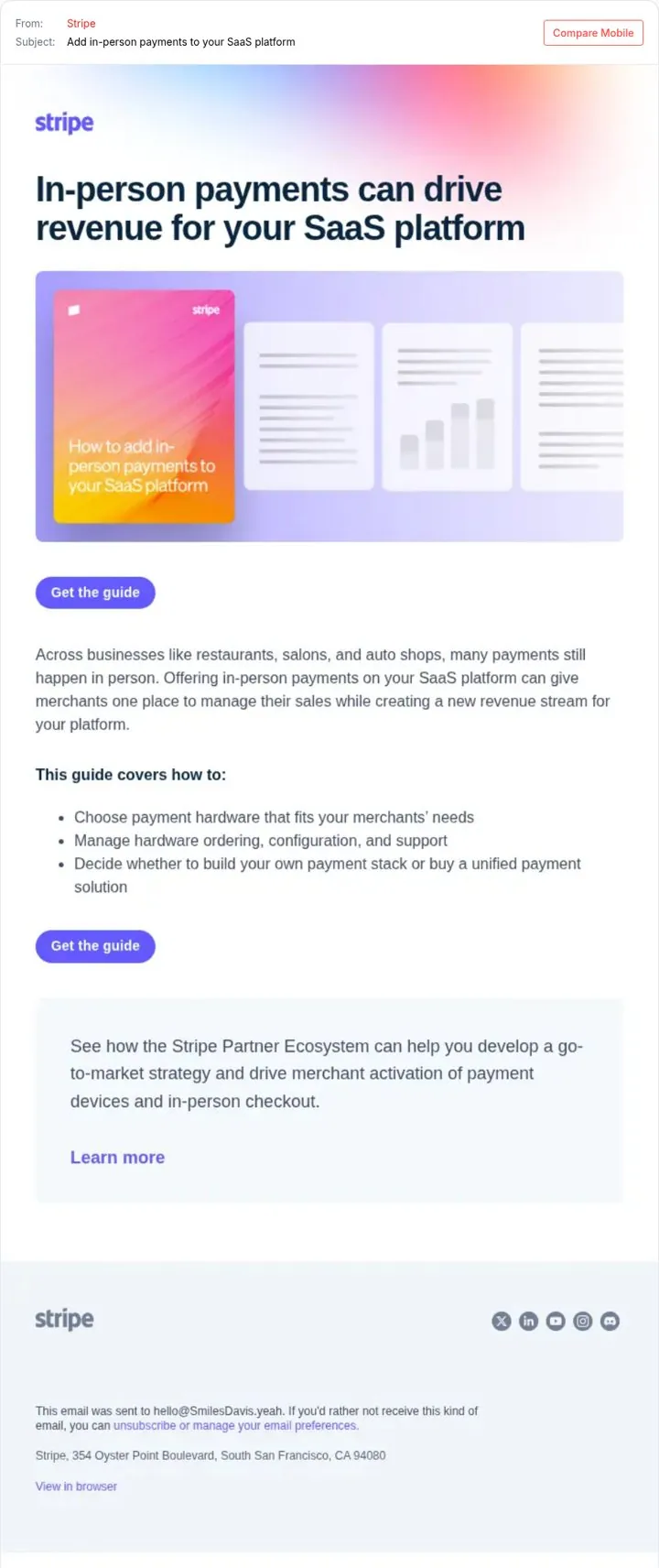
 Stripe
Leading with revenue for the reader makes the guide worth opening.
Pick a channel and a goal. Get real examples and a plan to fill in. Free, no login.
As many as there are steps to the first win, often a handful. Stop when they succeed.
Use whatever reads fastest. A short email with one button usually works best.
When the user reaches the first win, move them to product updates.