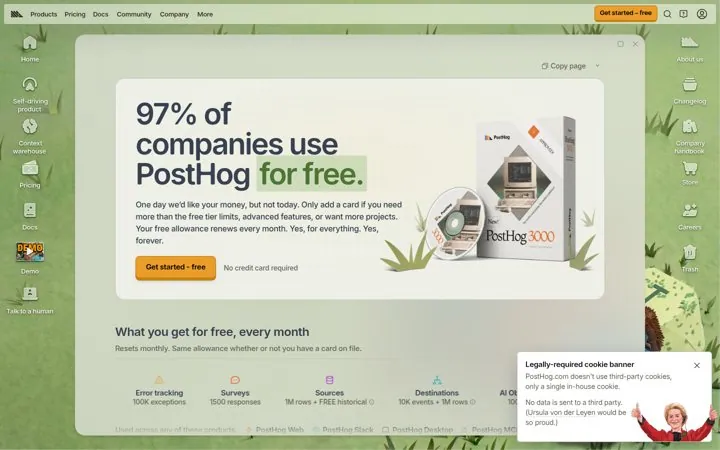
 PostHog
1. Lead with how many people pay nothing
Starting with free builds trust before any number shows up.
- Open with your free plan story
- List what free includes every month
- Explain why someone would pay later
Freemium gives a limited plan free forever, so people adopt slowly and upgrade when they hit a limit. A free trial gives the full product for a set time, so people decide fast. Pick freemium when users invite others or the product spreads by use, and a trial when value shows up quickly.
Updated · By Blake Emal · 5 real examples, each linked to its source
| Freemium | Free trial | |
|---|---|---|
| Time limit | None | Usually days or weeks |
| Feature limit | Yes | Usually no |
| Best for | Products that spread by use | Products with fast first value |
| Main risk | Many users never pay | People churn before they see value |
| Real examples | PostHog, Cal.com, Tally | Trial offers in many B2B tools |
PostHogStarting with free builds trust before any number shows up.
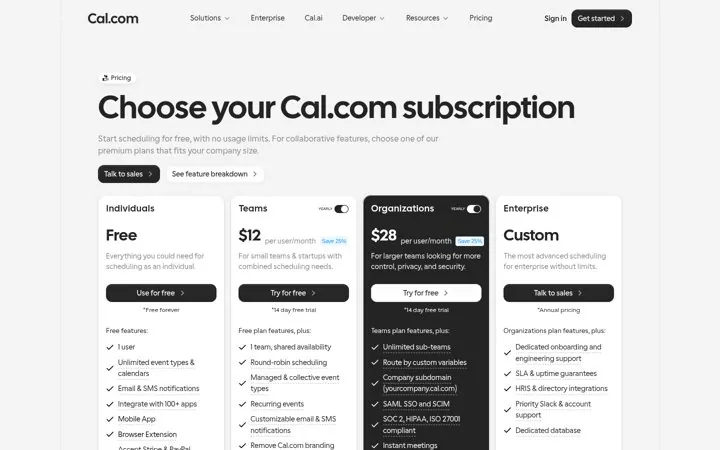
 Cal.com
A generous free line pulls in people who would never book a demo.
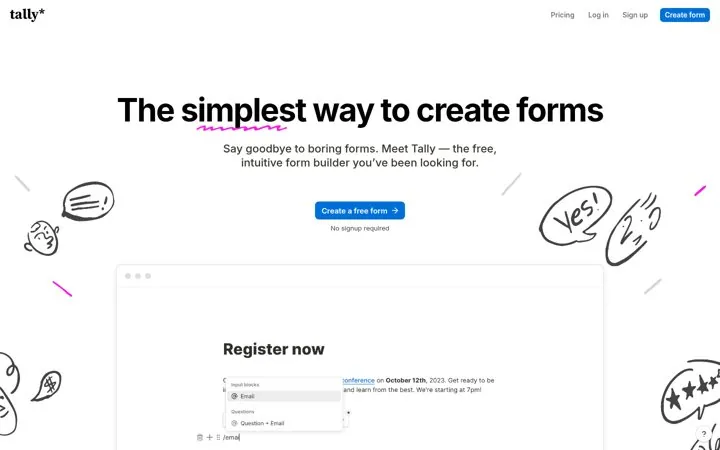
 Tally
Removing sign up from the first step gets people building right away.
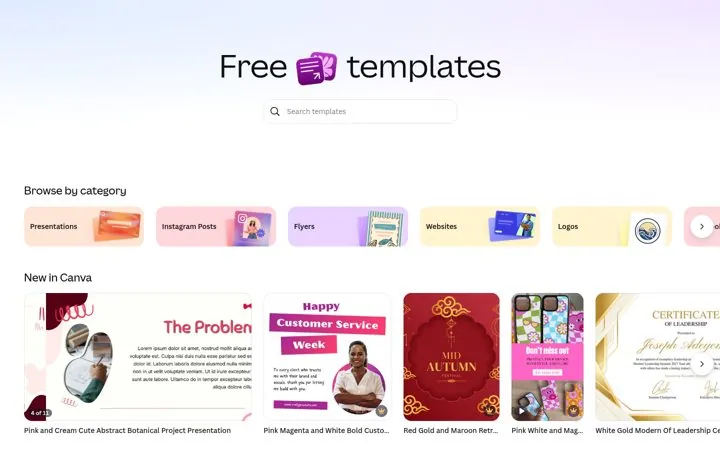
 Canva
The word free and a search bar start the product right on the page.
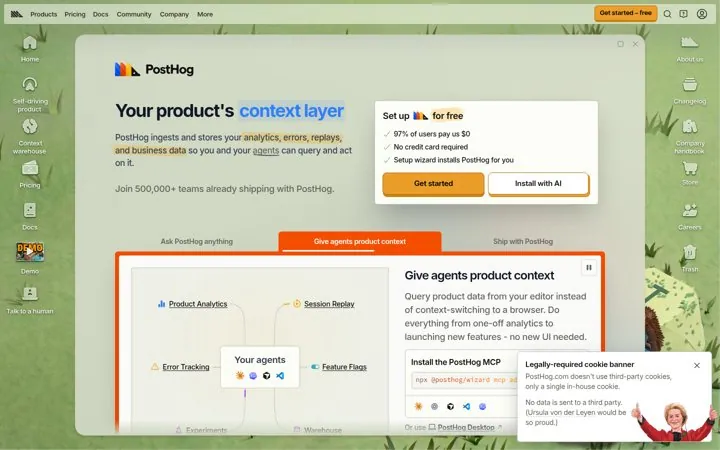 PostHog
Removing price worry at the first glance gets more people to start.
Pick a channel and a goal. Get real examples and a plan to fill in. Free, no login.
Yes. Many products keep a free plan and offer a trial of the paid tier on top.
Not always. Free users cost money to serve, so the free plan needs limits.
It depends on the product. Compare paying customers per hundred signups over a few months rather than trusting a general rule.